To say that water is taken for granted in the United States is an understatement. All day long we flush toilets, water plants, fill humidifiers, and wash everything from hands to dishes to dogs. And when we are feeling a little parched, we bypass the faucet in favor of a bottle of store-bought H2O. Some of us prefer one brand over another while others invest in fancy gadgets and filtration systems.


What I wouldn't do for a gulp of good old American tap water from the garden spigot right now!
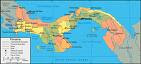
There is the rich Panama and the poor Panama with a miniscule number of what we might call middle-class. Rich Panama is very small in number but very rich. Water is drinkable and free-flowing in Rich Panama. And although Poor Panama is quite sizable in number and in kilometers, it is immense in its poverty, its isolation, its obstacles, and its despair. Water is something that is never taken for granted in Poor Panama.
Like most volunteers, my first six to eight weeks in the field were spent battling water-related stomach ailments. I boiled, filtered, and treated but to no avail. The water issues are many:
- Water is often unavailable. You open the faucet nothing comes out, sometimes for eight to ten straight hours. (I will let your mind wander as you think about the things one cannot do without water.)
- Water is often unclean. The locals take offense at this statement because they remember their pre-aqueduct days when they bathed in streams and hauled buckets of parasite- and rust-filled water to their homes. The aqueduct is a tremendous improvement and I certainly appreciate that I do not have to bathe in public and haul water in buckets but I do know that water is not supposed to be brown.
- When water is available and is not-so-unclean, it is ridiculously over-treated. The chlorine burns when I bathe and areas where skin tends to be most sensitive (again, use your imagination) continue to sting twenty minutes after every drop of water has been dried from my body.
I became much healthier when I moved into my own house, partly because I had more control over cleanliness issues and partly because my body had become acostumbrado (accustomed). But water continues to be an issue. I started catching rainwater in a bucket and running it through a filter for drinking. It worked great. I stopped getting sick and I saved myself the $20 per month (this a lot of money when you live off of $300 per month) I was spending on bottled water. But I still never had enough water for cooking and cleaning and flushing the toilet (for the one-third of my life when the faucet runs dry). It was time to get serious.
Around the same time that I became able to think about living here for more than the next twenty-four hours, I decided to invest in a more formal rainwater catchment system. My friend, Catherine B is a environment health volunteer in my region. She had already set up her own system and was more than happy to help me get started. It started with a 55-gallon tanque (drum) in which Catherine bore a hole close to the bottom and sawed the entire top off. This was not a small task! Catherine then schlepped the 55-gallon tanque to Changuinola where I was waiting to adopt it. The tanque and I then took the 45-minute bus ride back to my community.
I then went shopping for a pluma (tap/faucet), tuerca (plastic nut), tela (fabric), red (netting), and alambre (wire). I screwed the pluma into the hole that Catherine had made and awkwardly crawled into the drum. For some reason, I couldn't get the tuerca to cooperate. Oh, yeah! She told me to trim the burrs from the interior of the drum before I installed the pluma. So I unscrewed the tight pluma with my now sore palms and began looking for something sharp enough to cut through plastic. Knife-in-hand, I crawled back into the drum (less fun than it sounds )and eventually it was burr-free (or burr-reduced enough) that the tuerca actually fit to screw onto the underside of the pluma. Oh, wait a minute. I was supposed to do something with that tape she gave me. Where did I put it? I found it, along with the tube of silicone caulking and carefully written instructions that I should have started with. So I gave myself an attitude adjustment, unscrewed the pluma – again – followed the instructions, ending with a sloppy layer of caulking around the tuerca. I washed the fabric by hand (Is there any other way?) and hung it to dry while the caulking set overnight.
The next day, I mixed a small amount of precious rainwater from my little bucket with some dish detergent and carefully cleaned yesterday's sweat and exasperation from inside the drum. I topped it with the remnant of fabric and two layers of netting. I then borrowed a file (Who needs wire-cutters?) from my neighbor, measured off a length of wire, and sat on my back porch, filing away until the wire snapped. I wrapped the wire around the top lip of the drum and proudly twisted it to secure the layers that would reject debris and accept rainwater.
I then placed the drum on a platform just outside my back door where rain will slide off the rippled roof, through a tube, and into the tanque. And justice would not be poetic if in this region of Panama, where it rains every single day of the year, the skies are suddenly clear and my tanque remains bone dry.
What did I learn from all this? Life in the developing world is hard. Something as basic to human survival as water cannot be assumed, nor can any of the tasks associated with it. Sure, my neighbors have electricity and cell phones. A few of them even have laptop computers. But for every single one of them, washing fruit, relieving one's self, and doing laundry are not rote activities. They are impediments that stand between them and access to that which is assumed by the Other Panama.
Peace Corps tells us that we are to become members of the community. But I never forget that I am not one of them. Sure, I suffer the same discomforts but in a different way because I was reared amid the comforts. I know both worlds and for the moment, I choose to live in this one. The differences between me and my neighbors are huge and I only frustrate myself and confuse them when I try to explain them. Not only do I know both Panamas, but I know the life of the average and not-so-average American (except for maybe the richest of the rich and the poorest of the poor). They only know Poor Panama. They only know water that is either brown, over-treated, or nonexistent. They have never driven through a carwash, programmed a thermostat, timed automatic sprinklers to water their lawn, run a dishwasher, or for that matter, taken a hot shower.
This is the gap in which I live. I cannot open their souls and insert a chip giving them the wisdom gained from two hundred years of struggle and progress. Nor can I draw them a map that will get them to the Other Panama. But what I can do is live alongside them and earn their trust that they might allow me to equip them in a way that enables them to draw their own map so they can have the dignity of finding their own way.
Anyone know a good rain dance?